



No one enjoys being humiliated in front of forty thousand spectators! Former MLB umpire criticizes electronic strike zone.


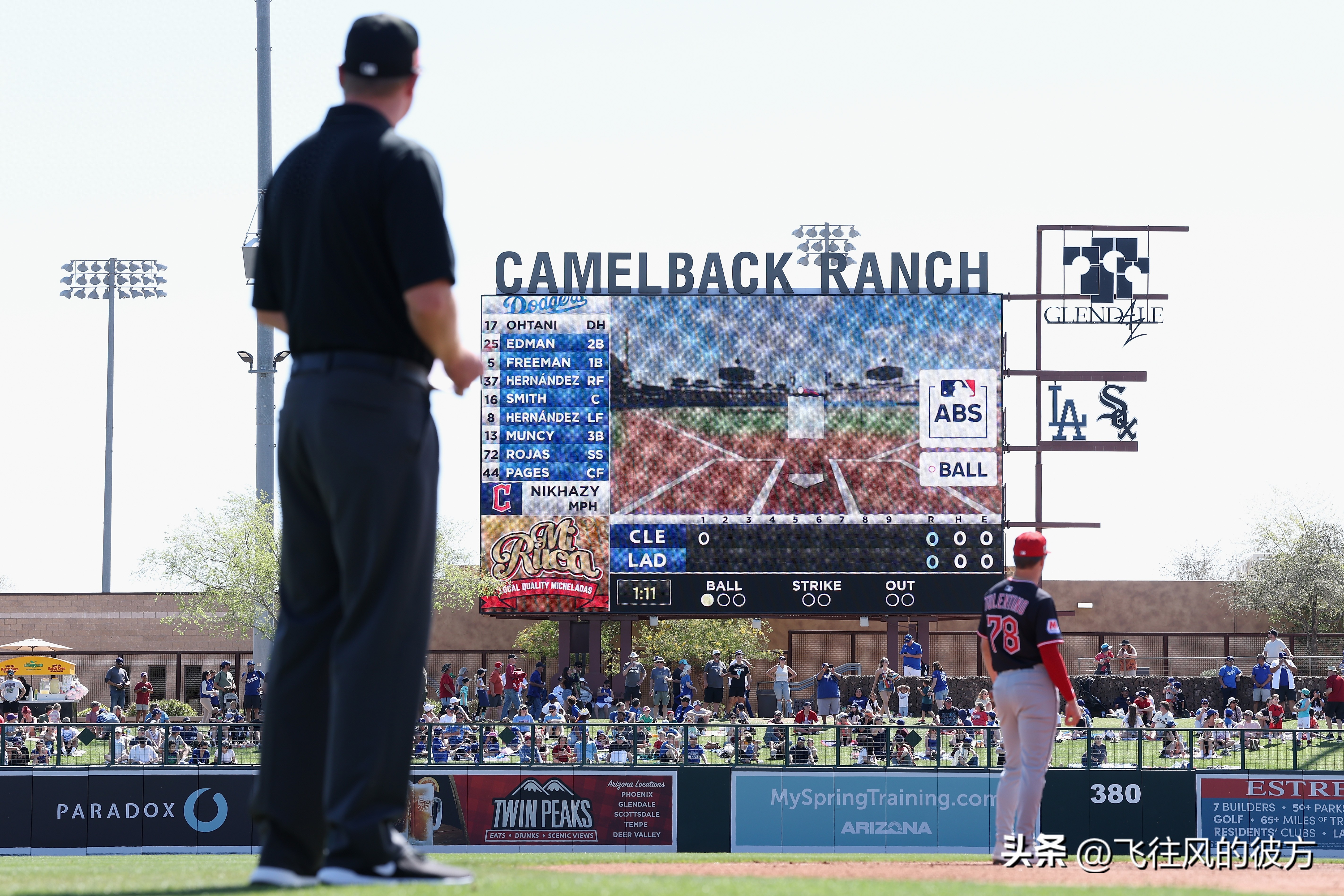
MLB officially launched the automatic strike zone challenge system this year. Former MLB umpire Richie Garcia remarked: "I believe it's disgraceful for umpires, really disgraceful. No one enjoys being humiliated before thirty to forty thousand fans."
The ABS system is composed of twelve Hawk-Eye cameras, enabling teams to challenge strike zone rulings. Each team has two challenge opportunities per game; if successful, the chance is retained; if failed, one is consumed. If regular challenge chances are exhausted, one additional chance is granted per extra inning. Pitchers, catchers, and batters can all initiate challenges.
Garcia criticized MLB's approach: "Their message is: I don't trust the umpire's strike zone, so I'll rely on some computer-savvy nerd operating this system—someone who knows nothing about baseball but holds a Ph.D. in physics or something—to calculate this and that."
This veteran umpire, during Game 1 of the 1998 World Series, missed calling a strike on a 2-2 pitch from San Diego pitcher Mark Langston, leading to Yankees batter Tino Martinez hitting a decisive grand slam on the next pitch, ultimately securing a sweep and championship for the Yankees.
Controversial calls occur in every game. According to AP reports, overall, umpire accuracy reached its highest historical level last year. MLB umpires judged 368,898 regular-season pitches last year, averaging 152 per game, with an accuracy rate of 92.83%, averaging about 10.88 missed calls per game. Compared to 2016 (averaging 16.58 missed calls per game, accuracy 89.31%), significant improvement has been achieved.
Former MLB umpire Ted Barrett expressed: "I'm 60 years old, and I feel the younger generation genuinely wants this technology; they want certainty on whether a pitch is a strike or a ball."
Another former MLB umpire, Sam Holbrook, said: "As an umpire, you don't want to miss any pitch; you aim for 100% correctness, but we're all human and cannot be perfect. Social media and news constantly criticize umpires for marginal calls; striving for perfect calls under such pressure is extremely difficult. I believe this system can correct obvious errors and also demonstrate that umpires are actually quite skilled."
Under the ABS system, a strike is defined as the ball passing through the vertical area centered over the home plate, with the upper boundary at 53.5% of the batter's height and the lower boundary at 27%. This differs from the strike zone described in the rulebook, which ranges from the midpoint between the shoulders to just below the kneecaps.
Barrett noted: "They will adjust challenge outcomes based on ABS rulings, because umpire performance will also be evaluated according to this system." He added: "It's psychologically taxing for umpires because when you make a mistake, you receive immediate feedback of failure. No one likes failing, but the positive side is that you didn't cause a team to lose a game or playoff. The downside is, sometimes you think: 'What am I doing here? I got overturned twice at first base.'"


Wonderfulshortvideo
she came to say WASSUP 🖤 Todo el mundo ama a Young Miko


I love you Dominican Republic 🇩🇴🙌🏻❤️.
El mejor equipo y el que más se goza 🤣🇩🇴: arriba RD. 🇩🇴
Run it back, YEONJUN!
Venezuela 🇻🇪 vs Italia 🇮🇹…( felicidades Venezuela, Dominicana 🇩🇴 puso todas la Esperanza y fuerza en ustedes ) 🙌🏻🙏.
Venezuela elimina ah Japan 🇯🇵👀🚨.
Venezuela se corona 👑 Campeon del classico mundial 2026 🤯🇻🇪🚨.
 Links
Links
 Contact
Address:UNIT 1804 SOUTH BANK TOWER, 55 UPPER GROUND,LONDON ENGLAND SE1 9E
Number:+85259695367
E-mali:[email protected]
 App
App


