



Shota Imanaga exits after six no-hit innings: "That was the right decision"



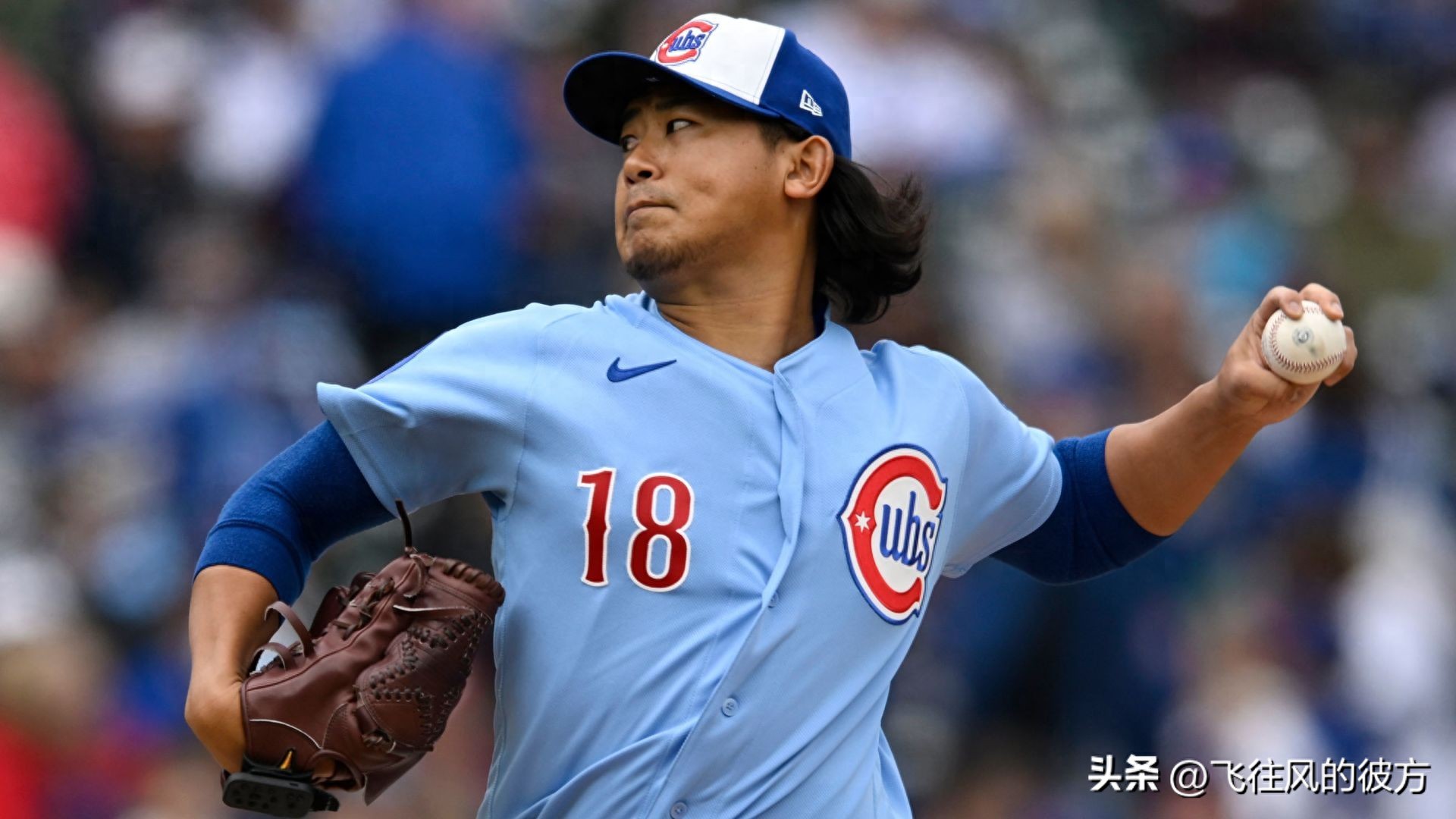
Shota Imanaga's last pitch of the day was a fastball that painted the lower border of the strike zone. It went directly into the mitt of Cubs catcher Carson Kelly, Pirates third baseman Nick Yorke held his swing, and Imanaga gave a confident nod as he headed back to the bench.
Imanaga had pitched six no-hit innings, but that strike also marked the end of his brilliant outing. His pitch count had reached 100, forcing Cubs manager Craig Counsell to call for the bullpen.
“That was the correct decision,” Imanaga said via translator Edwin Stanberry.
The no-hit game Imanaga was building vanished in the seventh inning, and the Cubs ultimately lost 0-2 to the Pirates at Wrigley Field. This game had the potential to recreate history, but the ending was disappointing. After all, just two years ago, Imanaga had spearheaded a combined no-hit game against the Pirates.
On September 4, 2024, Imanaga left the game after pitching seven no-hit innings against the Pirates. Relievers Nate Pearson and Porter Hodge completed the task that night, etching their names into the Cubs' 18th no-hit game in franchise history. Today, the Pirates avoided a similar script.
Counsell removed Imanaga for the bigger picture. “The question was, ‘What’s next? Where do you stop?’ You know?” the manager said, “And, ‘What impact does this have on his next start?’ He wasn’t going to finish that game. There was risk in letting him throw 120 pitches in his third start of the season. The decision was easy.”
In the seventh inning, veteran lefty Caleb Thielbar took over and gave up a first-pitch single to Ryan O’Hearn, followed by Bryan Reynolds hitting a two-run homer on the first pitch. That decided the game, while the offense from the North Side neighbors completely shut down.
The Cubs had baserunners in every inning through seven. They recorded 8 hard-hit balls (exit velocity 95 mph or higher), with 4 turning into hits. The Cubs drew 7 walks and were only struck out 6 times. They loaded the bases twice and had 8 plate appearances with runners in scoring position, but failed to produce any hits.
“You did a lot of things right,” Counsell said, “Then you come off the field and just think, ‘How did we not score today? How is there a zero on the scoreboard?’ So, it’s frustrating.”
That was especially true considering Imanaga’s effort.
When Imanaga left the game, he had delivered a brilliant six-inning start with 9 strikeouts and only 1 walk, lowering his career ERA against the Pirates to 0.28. In five encounters, this lefty has limited Pittsburgh to just 1 run over 32 innings, with 32 strikeouts and 7 walks, allowing only 13 hits total.
After three starts this season, Imanaga’s ERA is 2.81, a figure largely inflated by the three-run homer by Washington’s Joey Wiemer in the first inning on March 29. While that game cannot be ignored, the lefty has seen increased velocity and better swing-and-miss ability, racking up 20 strikeouts with just 4 walks over his first 16 innings of the season.
“I feel that after each pitch,” Imanaga said, “analyzing the trajectory I just threw versus the ideal trajectory, and making adjustments pitch by pitch, has been very helpful for me.”
“Imanaga,” Cubs pitching coach Tommy Hottovy said recently, “I think his stuff is better. It really is. I think you see it more in the swing-and-miss ability.”
In this start, Imanaga also accumulated a season-high 18 swings and misses, marking his fourth game this year (including spring training) with at least 17. He had racked up 25 swings and misses in a Cactus League start against the Angels on March 17. Imanaga had only one game with at least 17 swings and misses in the 2025 season (September 14, 19 times). He achieved it 11 times in the 2024 season.
In the 2024 season, Imanaga received votes for both the NL Cy Young Award and Rookie of the Year, and made his first All-Star selection. This season, Imanaga appears rejuvenated and capable of recapturing that form.
How important is this for the Cubs?
“Very important,” Cubs outfielder Seiya Suzuki said via Stanberry, “I faced him in spring training and saw his fastball. The ball has substance. For him to be able to produce consistently, consistently, is very important for the team.”


Wonderfulshortvideo
Tyler bringin’ the heat. 🔥


Tyler bringin’ the heat. 🔥
The Yoshi-verse. 🧐
The Yoshi-verse. 🧐
Everyone loves Yoshi. 🥹
Everyone loves Yoshi. 🥹
Donald Glover breaks down his go-to characters in Mario Kart, what his walk-up song would be and more! 😂
 Links
Links
 Contact
 App
App


