



The image of English football is being challenged.



The penalty for Chelsea closes a long chapter of controversy, but simultaneously opens up major questions about the transparency and fairness of English football.
1. The decision to penalize Chelsea with a £10 million fine for actions spanning seven years immediately faced a wave of skepticism from other Premier League clubs. In essence, this was not merely an administrative violation, but an organized system of "rule-bending" worth tens of millions aimed at recruiting top stars.
The biggest issue lies in the penalty's disproportionate impact. Players like Eden Hazard and Willian not only brought professional success but also generated long-term financial benefits for Chelsea. This means other clubs lost not only on the pitch but were also deprived of development opportunities.
The Premier League argues Chelsea did not breach financial rules if the expenditures were properly declared. However, this approach is criticized as overly "technical" and evades the core issue: competitive fairness. When a club can circumvent rules to gain advantage without facing proportionate consequences, trust in the league's integrity inevitably erodes.
The image of English football, built on foundations of transparent and fair competition, is therefore at risk of damage. The Chelsea penalty is not just the story of one club, but the first test for the credibility of the entire system.
2. If the Chelsea penalty sparked controversy, the Manchester City case could cause a much greater shock. With over 100 charges related to financial violations, this is seen as one of the biggest legal cases in football history.
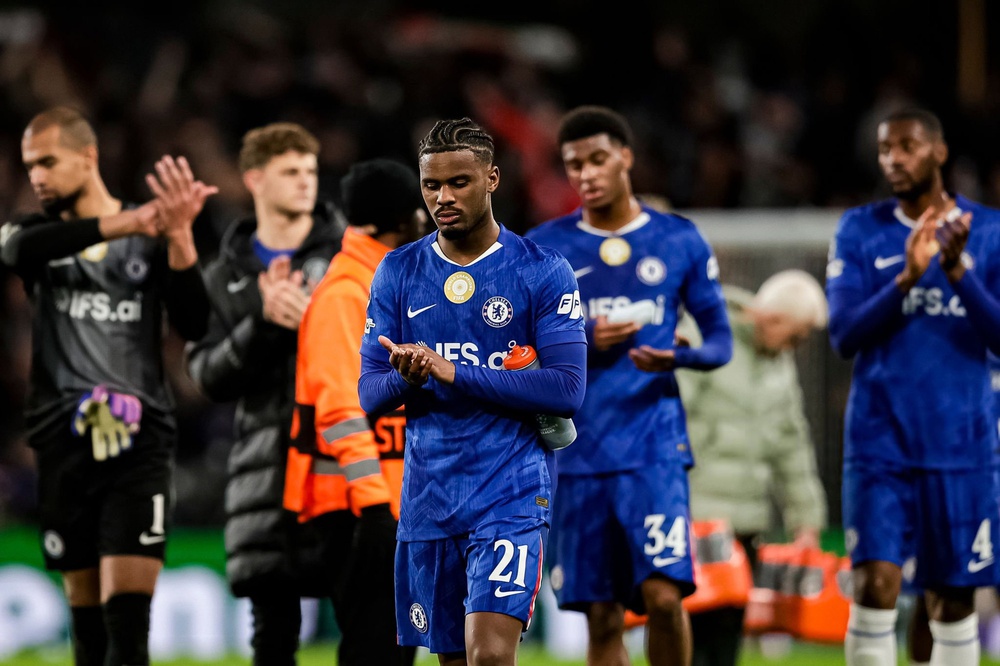
The penalty for Chelsea affects the image of English football.
Unlike Chelsea, Manchester City denies all charges and is pursuing a legal battle to the end. This puts the Premier League in a difficult position. The past three years have shown the high cost of confronting a financially powerful club like Manchester City. Massive legal expenses, internal divisions, and media pressure force the Premier League to weigh principle against practicality.
In this context, the lenient penalty for Chelsea raises concerns that the Premier League is shifting towards a "compromise" approach rather than confrontation. If this repeats in the Manchester City case, the consequences will not stop at a controversial ruling but will severely undermine the league's reputation.
Conversely, if Manchester City receives a heavy penalty, the Premier League must prove it is sufficiently independent and strong to uphold the rules. Regardless of the outcome, this is a turning point that could shape the image of English football for years to come.
3. The Premier League has long been not just a sports competition but an economic "empire" with global influence. Therefore, disciplinary decisions carry not only legal significance but also directly impact its brand.
The Chelsea penalty reveals a reality: the Premier League appears to prioritize stability and harmony over confrontation. In the short term, this avoids costly legal battles and maintains relationships with major clubs, the "drivers" of revenue and global appeal.
However, long-term, this approach harbors significant risks. When regulations are not enforced rigorously, the league's core values of fairness and transparency will be eroded. Fans may start questioning: Does success on the pitch truly come from ability, or from advantages outside the rules?
For commercial partners and investors, the image of a league that is "flexible" in handling violations is not necessarily a positive signal. Credibility is the key factor creating the Premier League's appeal. Once trust is shaken, the consequences will be difficult to repair.
In the context of increasingly strict scrutiny in football, the Premier League faces a strategic choice. The Chelsea penalty and the upcoming ruling on Manchester City will be the clearest measure of that choice.



 Links
Links
 Contact
Address:UNIT 1804 SOUTH BANK TOWER, 55 UPPER GROUND,LONDON ENGLAND SE1 9E
Number:+85259695367
E-mali:[email protected]
 App
App


