



Is Vietnamese football going against the warning of the former FIFA President?



The Vietnamese national team is increasingly using Brazilian-origin players, raising concerns about dependency and developmental deviation as warned by former FIFA President Sepp Blatter.
The wave of naturalization is spreading in world football, and the Vietnamese national team is also part of this trend. However, the increased use of Brazilian-origin players leads many to question: is the national team deviating in its development, as warned by former FIFA President Sepp Blatter nearly two decades ago?
In 2007, the former FIFA President made a notable statement suggesting that the future World Cup might feature "two or three Brazilian teams." At that time, this was seen as a wake-up call about national teams relying too heavily on naturalized players, especially from talent-rich football nations like Brazil. Today, that scenario is somewhat reflected in many teams, including Vietnam.

Under coach Kim Sang Sik, the Vietnamese national team has clearly moved in this direction. Following the inclusion of Nguyễn Xuân Son and Đỗ Hoàng Hên, the list of Brazilian-origin players could continue to expand with names like Gustavo, Janclesio, or Geovane Magno, forming a group of players with shared origins in the squad.
It is no coincidence that Brazil has become a primary source. The V.League has been a "common destination" for foreign players from the samba nation for many years, allowing them time to adapt, perform consistently, and meet naturalization requirements. This opens significant opportunities to bolster the national team.
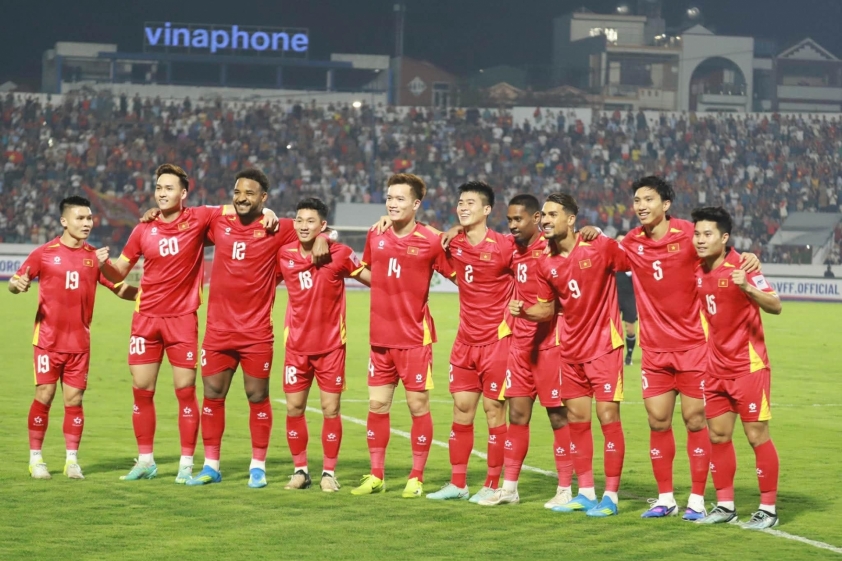
From a professional perspective, the benefits are undeniable. Brazilian-origin players often possess superior physique, technique, and experience, enhancing squad quality. However, this brings concerns about identity and long-term development, as opportunities for domestic players may diminish.
Meanwhile, many top Asian football nations like Japan, South Korea, and Iran remain committed to youth training and internal development. This presents a dilemma for the Vietnamese national team: to leverage naturalization for rapid progress, or to maintain a sustainable direction. And precisely in this regard, Sepp Blatter's warning remains entirely relevant.


Wonderfulshortvideo
tottenham relegation tottenham relegated


Great defending from Rüdiger 👏
Ganglion cyst removed
max dowman highlights today max downman vs mansfield town arsenal 2-1 mansfield town
User SportScoop has posted a video.
scott mctominay aura scott mctominay pictures mctominay edit
yamal goal today yamal highlights today yamal instagram story yamal ig barceona 1-0 athletic club
 Links
Links
 Contact
Address:UNIT 1804 SOUTH BANK TOWER, 55 UPPER GROUND,LONDON ENGLAND SE1 9E
Number:+85259695367
E-mali:[email protected]
 App
App


