



World Cup 2026: The English and Their Unwavering Belief in Winning the Championship



Amidst performance ups and downs, a dense fixture list, and mounting fan expectations, England still marches toward the 2026 World Cup with a resilient faith.
Six decades have passed since the 1966 world championship, but the desire to reclaim glory has never faded. Under Thomas Tuchel's leadership, this belief is not merely emotional but grounded in clear professional foundations.
A Mature Generation
One key factor fueling England's expectations is Tuchel's proven cup competition management. Throughout his coaching career, he has demonstrated adaptability and precise decision-making in crucial matches. The pinnacle was the 2021 Champions League victory with Chelsea, where his underrated team successively overcame Europe's top contenders.
Tuchel's strength lies in organizing a flexible tactical system, emphasizing balance between defense and attack. Limitations seen at club level, such as maintaining stability over a long season, are less relevant in a short tournament like the World Cup. In that context, his ability to read games and adjust personnel per opponent becomes a significant advantage.
Alongside the head coach's role, England currently possesses a squad mature in both skill and competitive mentality. The average age around 26-27 is ideal, where players have accumulated sufficient experience while maintaining good physical foundations. Key figures like Harry Kane, John Stones, and Jordan Pickford have all experienced major tournaments, including World Cups and EUROs.
Conversely, the next generation brings energy and breakthrough potential. Jude Bellingham has established his status at Europe's top level, while Bukayo Saka and Declan Rice gain more Champions League experience. This blend helps England avoid the imbalance seen in previous eras.
Another notable point is the number of national team appearances among the core players. This is especially important given that major tournaments always involve media pressure, dense match schedules, and rapid adaptation requirements.
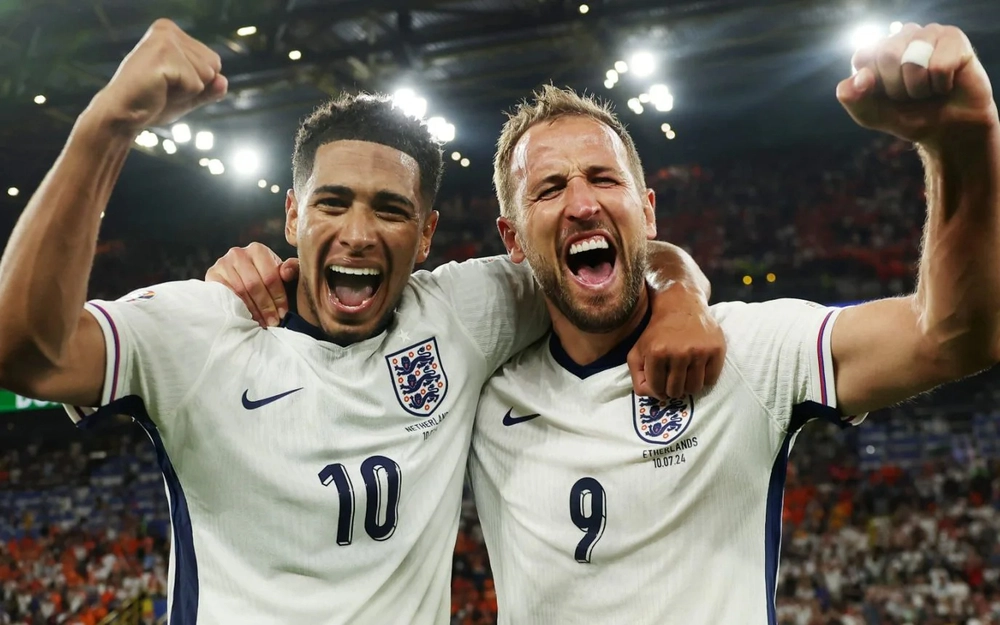
The England Team Has Sufficient Reasons to Believe in Winning the 2026 World Cup
Unconvincing results in recent friendlies do not fully reflect the team's true strength. Many key players were rested for physical recovery, while the lineup was more experimental. In reality, top teams often don't peak early in the year but significantly improve entering the main tournament.
Tactical Diversity
If a second factor underpinning England's confidence must be identified, it is the diversity in match approach. In modern football, where the skill gap between teams is narrowing, small details like set pieces or individual brilliance can determine outcomes.
Set plays have long been a traditional strength of English football. From David Beckham's era to the present, the ability to utilize corners and free kicks has been maintained and refined. Under previous coaching staff, England scored many goals from set pieces at the 2018 World Cup. Currently, with players like Saka or Reece James possessing good passing ability, this remains an effective attacking option.
Given North America's harsh weather and dense match schedule, optimizing opportunities from set plays becomes even more crucial. This approach helps the team conserve energy while ensuring effectiveness, especially against well-organized defensive opponents.
Additionally, personnel issues in some previously weak positions are gradually being resolved. On the left flank, Luke Shaw's return or the maturation of younger options improves ball deployment. The midfield also has alternatives alongside Rice, providing flexibility in control and distribution.
In attack, Kane's role remains central. The Bayern Munich striker not only maintains stable scoring output but also participates more in organization. Playing in the Bundesliga, with its winter break and different intensity compared to the Premier League, may help him achieve better physical condition entering the World Cup.
Equally important is the creative resources England now possesses. No longer reliant on simple wing play, they have multiple players who can operate flexibly between lines. Bellingham excels at penetrating the box, Phil Foden is adept in tight spaces, while Cole Palmer and Eberechi Eze offer distinct options in creativity and finishing.
Before officially participating in the 2026 World Cup, England will have two friendlies against New Zealand (June 6) and Costa Rica (June 11). They will begin their 2026 World Cup campaign against Croatia on June 18.



 網站地圖
網站地圖
 聯絡方式
聯絡方式
 App
App


