



Jovic Crosses Over to Copy Gu Ailing's Homework! How Can Amateur Players Copy Their Homework to Improve Tennis Skills?



Holding three match points at Indian Wells but being reversed, anyone would be depressed for quite some time. However, the 18-year-old American tennis prodigy Jovic miraculously revived fully within just two weeks.
At Beijing time yesterday morning, Jovic spent only 1 hour and 16 minutes in the second round of the WTA1000 Miami Open, sweeping past former world No. 2 Badosa with a score of 6-2, 6-1. After the match, this 18-year-old American youngster openly admitted: this comeback was entirely thanks to "copying" Gu Ailing's homework!
Yes, that's Gu Ailing, who manages skiing, attending Stanford, and winning championships without neglecting any. After fully reviving in Miami, Jovic坦言 she introduced Gu Ailing's diary mindset and analytical thinking methods into her own tennis training and matches, turning pressure into motivation, engraving focus into her bones, going from the brink of collapse directly to becoming a winner on the court.
Learning from Gu Ailing, Jovic's cross-disciplinary learning can be called the most valuable "copying homework" in the sports circle.

First, let's talk about what Jovic actually experienced. At the recent Indian Wells Open, Jovic faced Colombian player Osorio, and the match was very tight. In the second set, entering Jovic's service game, with three match points in hand,眼看 she was about to win the match, but was硬生生 reversed by her opponent, losing 4-6, 7-6, 6-3.
In the days following the match, Jovic's mind kept circling around that game, especially those three match points which she couldn't let go for a long time, "That match was really tormenting, I haven't completely recovered yet!" For most young players, they would早就 self-doubt,心态崩 to the point of not being able to play the next match. But Jovic was smart, she didn't钻牛角尖, but found a "top mindset teacher"—Gu Ailing.
Arriving in Miami, as the 18th seed, Jovic enjoyed a first-round bye, but she would face former world No. 2, Spanish player Badosa in the second round, which was obviously a tough match.
Perhaps Badosa's glory days are already gone, or Jovic's mental resilience has greatly improved, or both factors叠加共同成就了 this seemingly easy victory. However, after winning, Jovic did not, as per惯例,仅限于 praise her opponent and thank her team at the press conference, but instead expressed gratitude to Gu Ailing, "Thank you Gu Ailing! She inspired me to start writing diaries, I now write almost every day, it's really useful!"
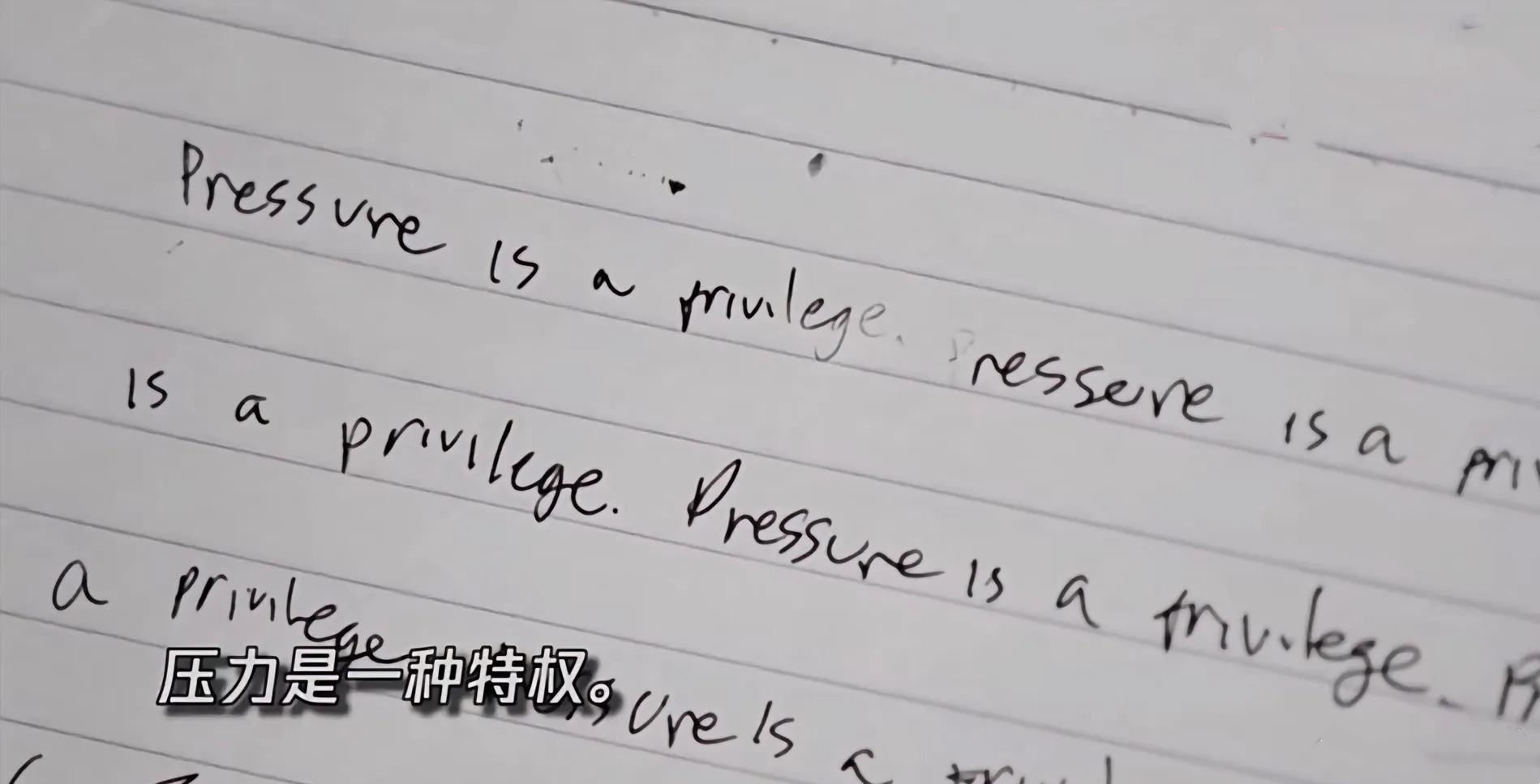
Gu Ailing repeatedly wrote in her diary "Pressure is a privilege"
Actually, Gu Ailing's这套心态大法 is早就 no secret. In the documentary "Gu Ailing: Starting Again," it was曝光: when preparing for major competitions under the greatest pressure, she would一遍又一遍写下 "Pressure is a privilege," using this phrase to motivate herself.
People in the tennis circle are very familiar with this phrase, it comes from American women's tennis legend Billie Jean King, and this phrase is also engraved on the Arthur Ashe Stadium at the US Open.
This widely circulated phrase in the tennis circle was跨界引入 by Gu Ailing into the skiing world.兜兜转转, Jovic又把这句话从 the skiing world引入到了 the tennis world, using it to guide her own tennis matches.
In Jovic's eyes, pressure is no longer torment, no longer a burden, but proof that you have the资格 to stand on the顶级舞台, to be关注 by the world. Feeling pressure means you are moving upward, challenging your limits.
If "Pressure is a privilege" is引自别人的名言, then the following passage is Gu Ailing's原创, it has recently广为流传.
“I don't refuse rest, but hate浑浑噩噩; I don't fear quiet, but拒绝停滞不前. If destined to endure煎熬, I also心甘情愿,清清楚楚地去承受, because this is the life I chose.”—摘自 Gu Ailing's diary "On Possession"
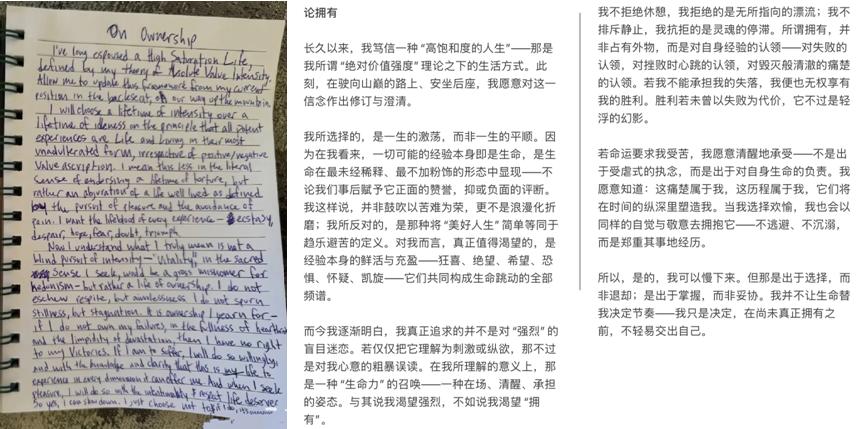
Original text and translation of Gu Ailing's diary "On Possession"
Gu Ailing's这段话 directly speaks极致 about "actively bearing pressure,清醒成长." And Jovic learned these two tricks完完整整.
From Indian Wells to Miami, Jovic坚持每天写日记, she像 Gu Ailing那样, pouring all her thoughts onto paper. When losing, she didn't骂自己,不内耗, but冷静拆解: which step did I hesitate on just now? Why was I反超? How should I play next to avoid陷入赛点危机?
Jovic used Gu Ailing's "思维拆解法"明明白白: first write down emotions, then理清楚 problems, finally调整好心态. After going through this流程,纠结,焦虑,自我怀疑全被赶跑,剩下的是专注 and底气.
People with certain tennis experience know that tennis really depends on mindset. No matter how good your technique is, how accurate your first serve is, how stable your backhand is, once your心态崩, it's all wasted.
Based on my over ten years of playing tennis, when reviewing总结胜负 after matches, we often回想比赛中的关键一分或是关键一刻, and that point之所以决定胜负, that moment之所以成转折点,表面上可能是 luck,实质上却是心态,所谓的 "一分崩,全局崩."
Professional players are同样如此.关键分,关键局,关键盘, what is拼的早就不是 technique, but who is更稳, who is更专注, who不被压力吓倒.
Jovic tells everyone with her亲身经历: mental training is as important as practicing serves, forehands and backhands, even more important. And learning to write diaries, learning to use Gu Ailing's心理分析方法 to analyze oneself, analyze得失, you can find the right strategy to solve problems.
From Gu Ailing to Jovic,再到我们每个人,都能其中学到有用的东西.
For example, I do it this way. Over the past ten-plus years, almost每次练完球,打完比赛或是阅读一本书, I would write some长短不一的笔记,记下自己当时的感悟,心得以及收获.正是缘于这一习惯, I至今已累积了170,000-word学球笔记.
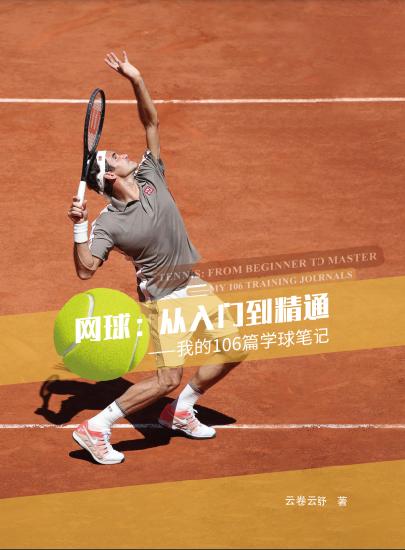
Cover of the book I wrote "Tennis: From Popular to Mastery—My 106 Learning Notes"
When交流经验 with beginners, I like to提三点建议: first, find a professional coach to固定自己的动作; second, if嫌教练费太贵 or约不到球友,可以独自打墙,并用手机拍下来事后观摩; third,每次训练或比赛后都记一点心得体会,积少成多后你对网球就会有更多,更深的思考和感悟.
具体而言, I think following Jovic and Gu Ailing,三步就能改掉心态失衡,关键分手软等常见问题.
第一步,打完别闷头想,拿个小本本记两句.不用写长篇大论,就记: today哪分最可惜?当时为什么会犹豫?下次怎么调整.写下来,脑子就不乱了.
第二步,关键分之前,在心里默念“Pressure is a privilege.”告诉自己能打关键分,说明你水平够,机会到了,不是倒霉更不是折磨,而是幸运,这样就能迅速调整好心态.
第三步,放过上一分,专注下一拍.像 Gu Ailing说的,不纠结过去,不内耗,只盯当下.球已经落地,想再多没用,专注于当下,专注于下一拍才是最重要的.
坚持一段时间你就会发现,自己或许没那么容易急了,失误慢慢变少了,关键分也敢出手了,网球的心理和技战术水平都有了提升.(Source: Tennis Home Author: Yun Juan Yun Shu)

 Links
Links
 Contact
Address:UNIT 1804 SOUTH BANK TOWER, 55 UPPER GROUND,LONDON ENGLAND SE1 9E
Number:+85259695367
E-mali:[email protected]
 App
App


